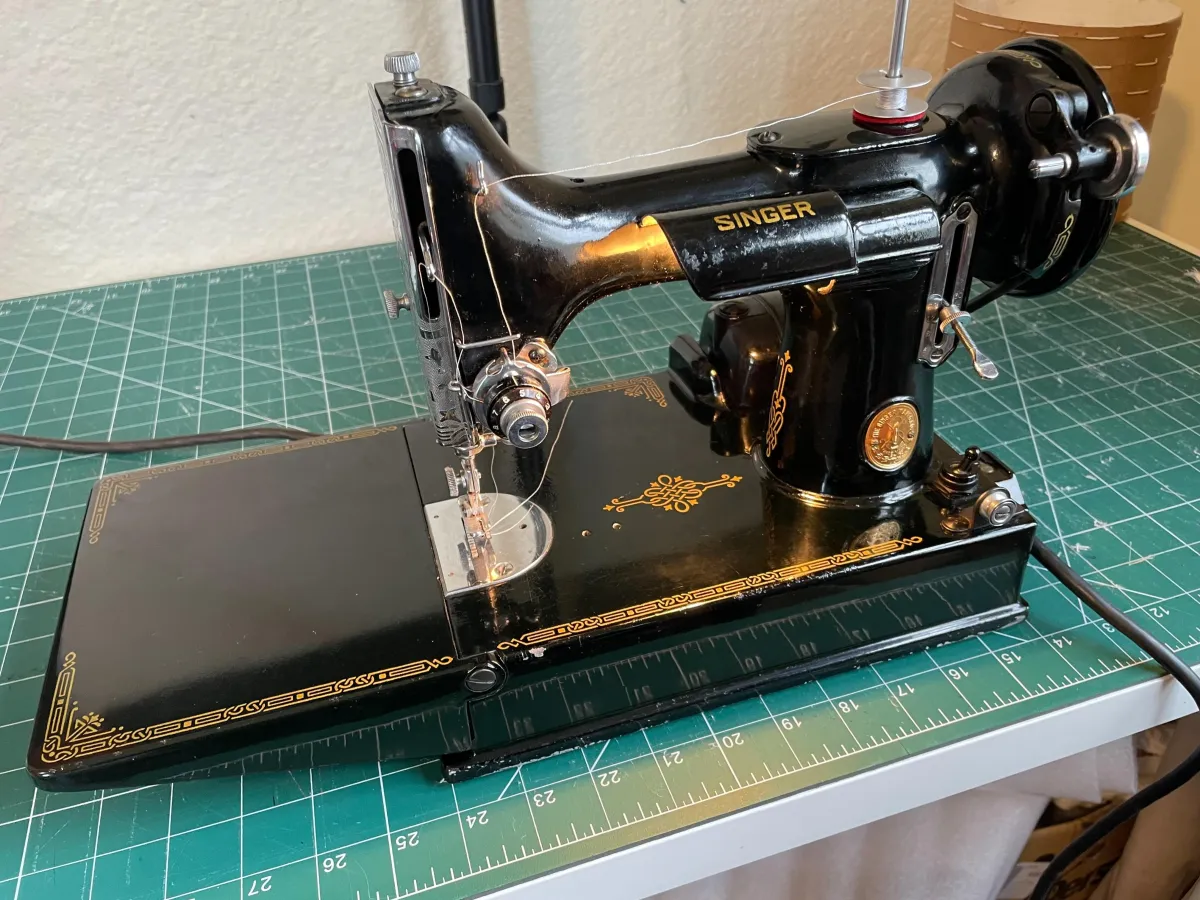
Singer Featherweight 221 and 222: Why I Own Both
Singer Featherweight 221 and 222: How I Ended Up with Two Featherweights
Hidden away in boxes are two little treasures – my Singer Featherweight 221 and Singer Featherweight 222.
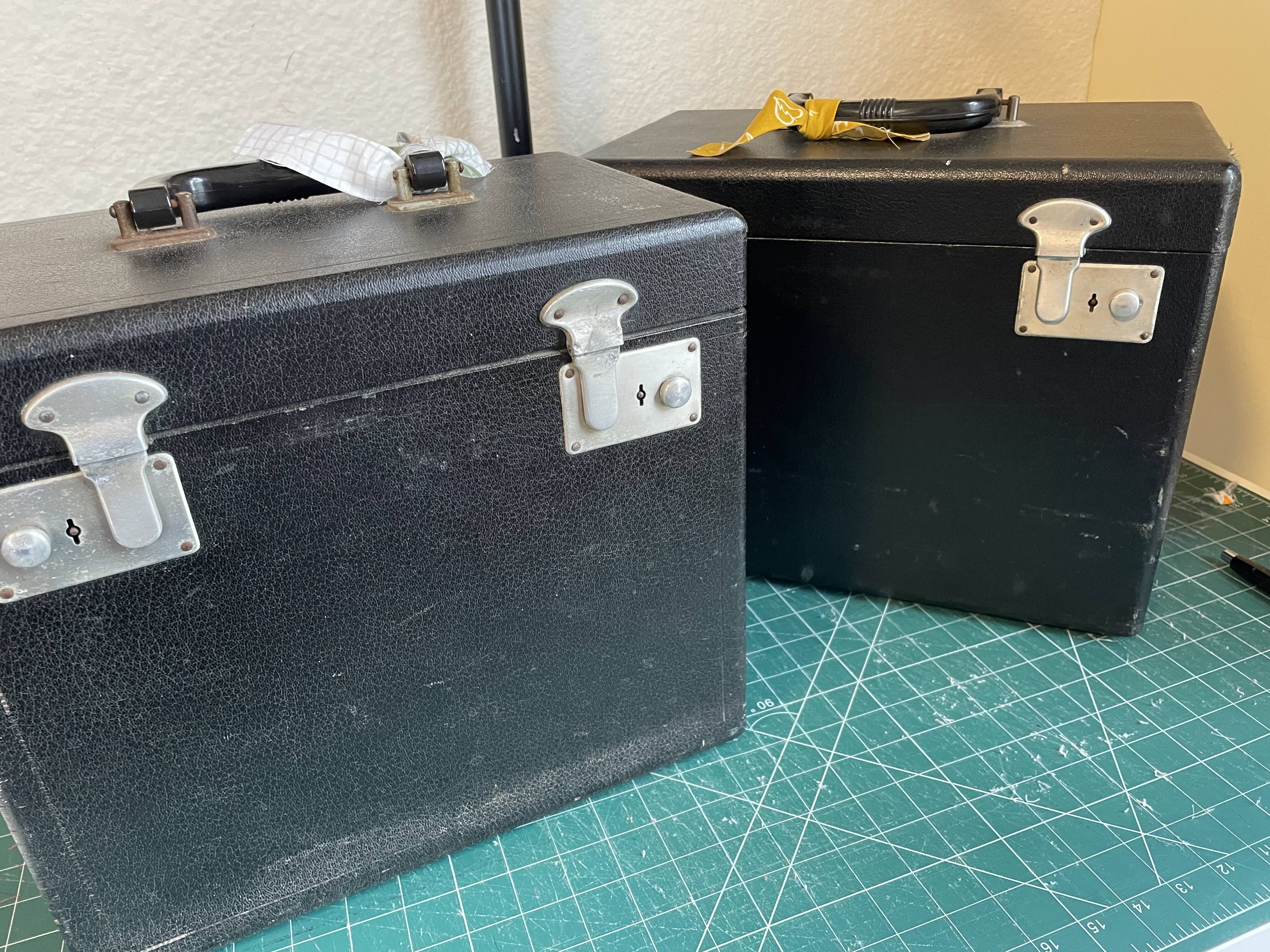
Why do I have two Featherweights? The second one wasn't exactly part of the plan.
It all started when I purchased a Singer Featherweight 222 sight unseen from Facebook Marketplace. Looking back, that was probably a mistake.
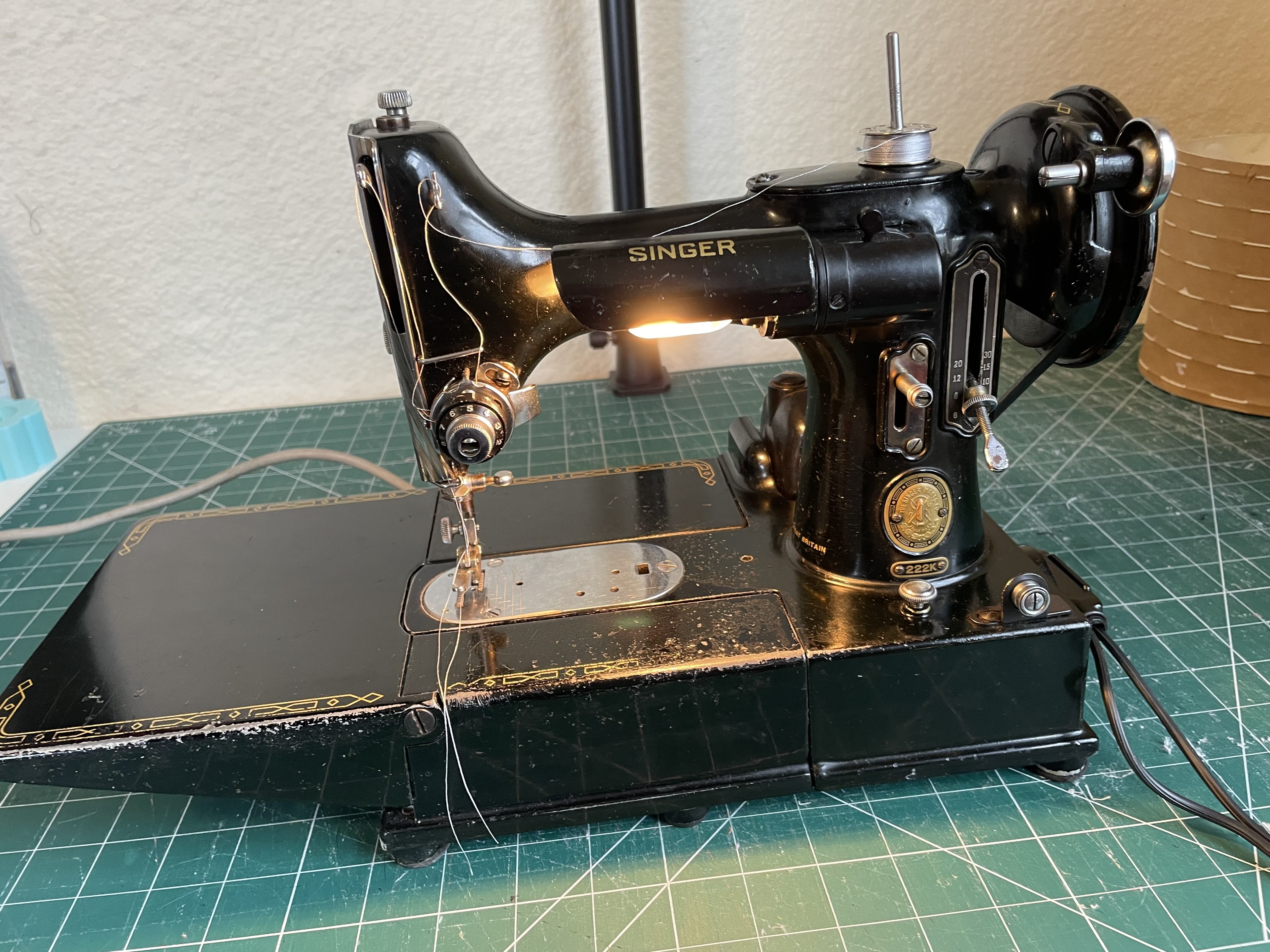
When it arrived, it wasn't quite in the condition I had hoped for. The Bakelite electrical connections were showing their age, and the foot controller had a habit of continuing to run even when it wasn't being pressed. Not exactly ideal.
The machine itself fascinated me though, and before long I found myself heading down a Featherweight rabbit hole again.
My plan when after I received it, was to repair and repaint the 222, restoring it to its former glory. Before I started pulling things apart and potentially ruining it completely, I decided it might be wise to find another Featherweight first. That way, if my restoration attempts didn't go quite to plan, I would still have a working machine.
As luck would have it, another Featherweight became available locally. Thanks to Sue from Pink Possum, I soon found myself bringing home a Singer Featherweight 221.
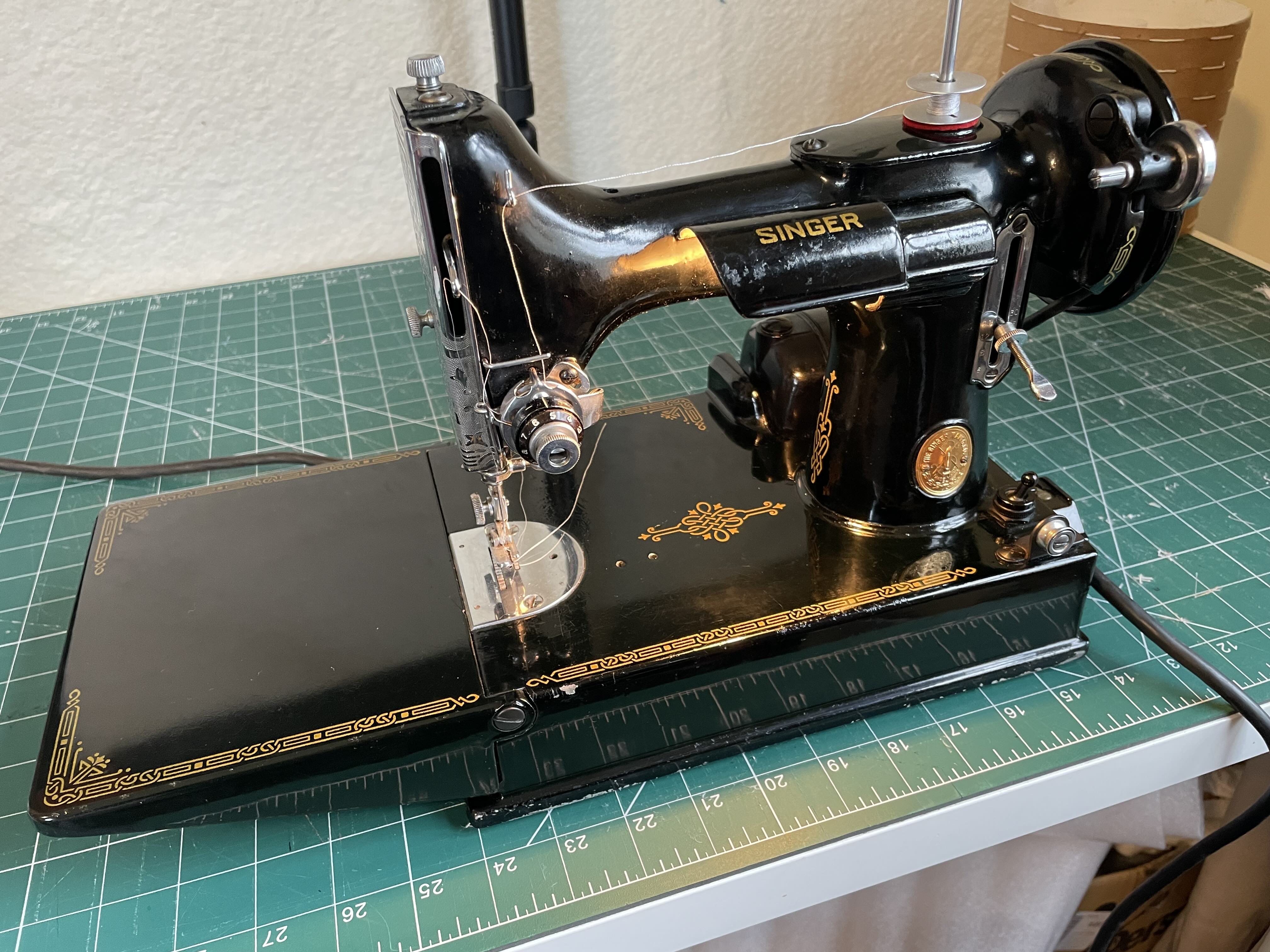
The idea was simple enough. The 222 would become my project machine, and the 221 would stay original.
At least, that was the plan.
Once I started researching repairs, I discovered The Featherweight Shop and ordered replacement electrical cords along with some Bakelite parts. I watched videos, read articles, and convinced myself I could probably fix everything.
Some repairs were more successful than others.
While I managed to improve a few things, the foot controller was ok, but the electrical cord oh no. Eventually, I realised that complete restoration was probably best left to people with a lot more experience than me.
Both Featherweights were eventually sent to Gary in Nelson, who had the unenviable task of repairing my repairs while servicing both machines at the same time.
The repainting project has been quietly shelved for now, along with a few of my other random works in progress.
Playing Favourites
This is also why I play favourites.
Although the 222 is the rarer model, my favourite is the 221.
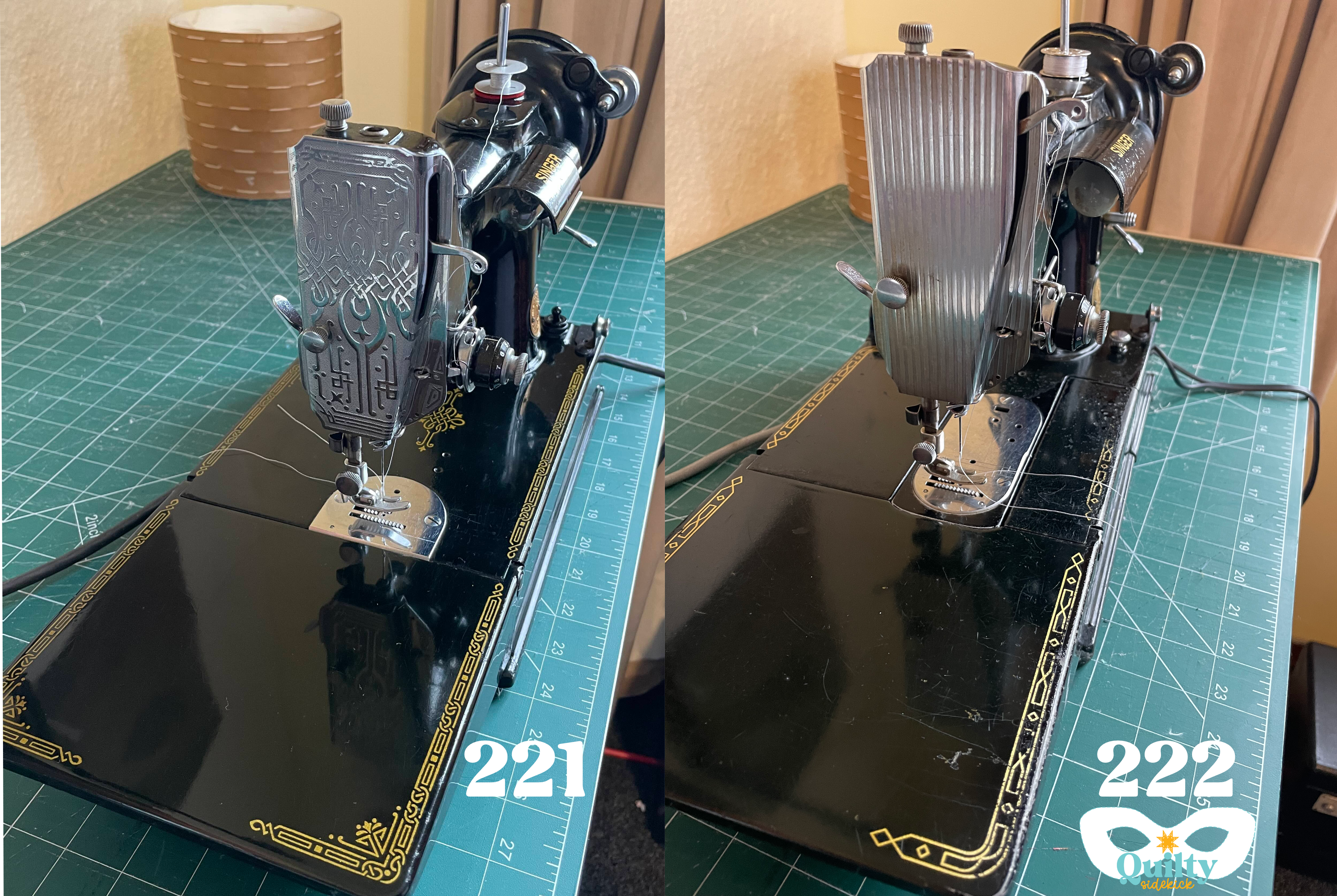
The 221 was manufactured in 1947, while the 222 dates from 1953. Despite being the older machine, the 221 is in much better cosmetic condition and, in my opinion, is simply prettier.
There's just something about the decals, the more decorative faceplate, and the overall look of the machine that I love.
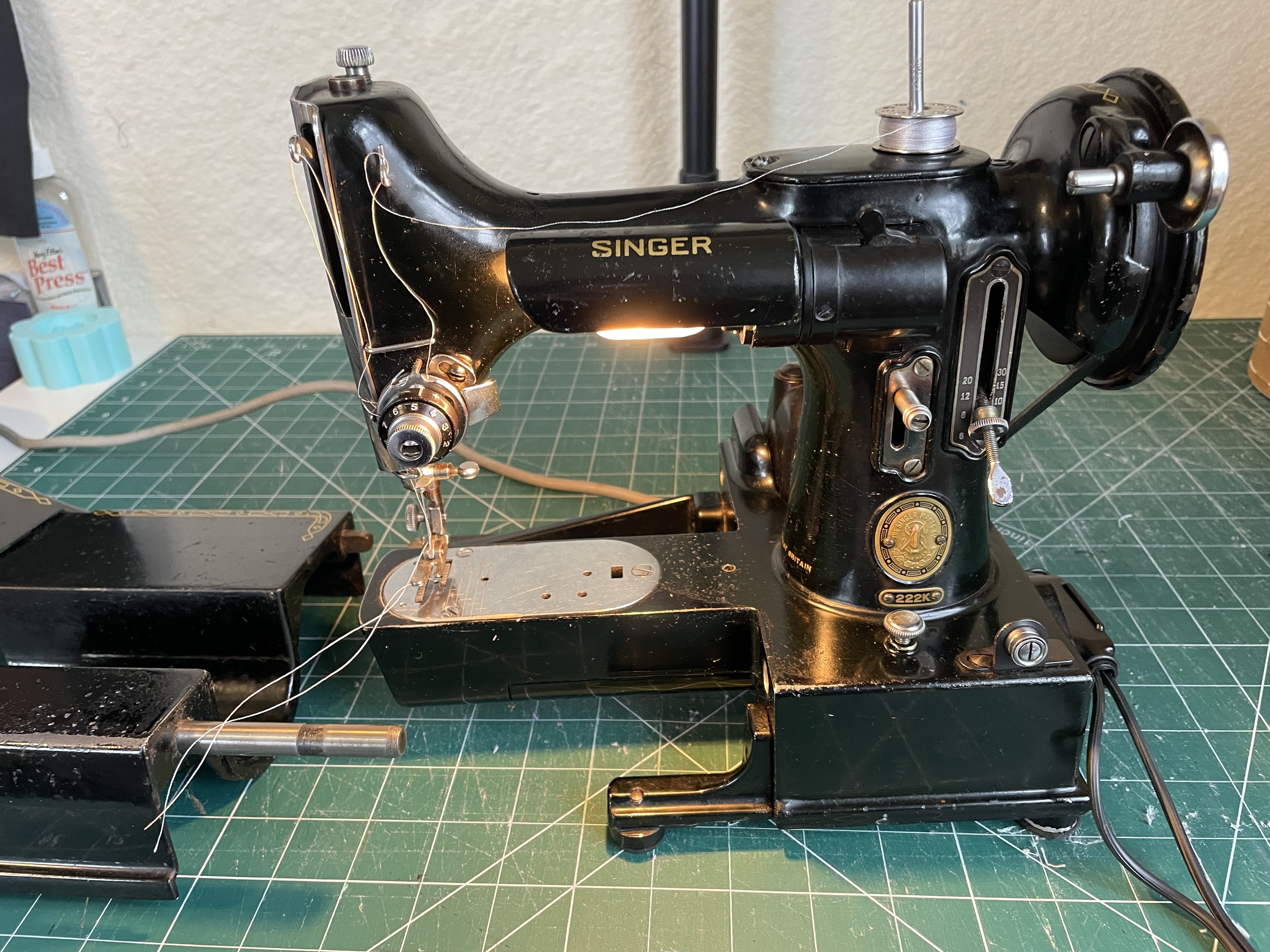
The 222, however, has a feature that makes it quite special. Unlike the more common 221, it has a removable bed attachment that reveals a free arm underneath. It is one of the reasons the 222 remains such a sought-after model among us Featherweight enthusiasts.
Quilting or Piecing with a Featherweight
Like any vintage machine, Featherweights have their own little quirks.
One thing I constantly have to remind myself is that they thread from right to left. If you're used to modern sewing machines, it feels completely backwards at first. Well to me and my Janome HD10.
It takes a little while to adjust, but once you do, they are an absolute delight to sew with.
One of my favourite things is taking my 221 along to my monthly quilt meetings. It means I can leave my larger machine at home and enjoy sewing on a machine that's small enough to carry without needing a recovery plan afterwards.
The Featherweight always attracts attention.
At one meeting, one of the husbands stopped in his tracks, stared at it for a moment, and finally asked,
"Is it real?"
Yes.
Yes, it is real.
And yes, she still sews beautifully.
Why Featherweights Are Still Loved Today
While watching one of my many Featherweight YouTube videos, I learned that these machines originally sold for around US$125 when first introduced in 1933.
That was a significant investment at the time, which perhaps explains why so many were carefully looked after and are still sewing today.
There is something special about these little machines.
I don't think it's just because they're pretty.
Every Featherweight has a history. Generations of sewists have sat behind them, stitched with them, repaired them, and cared for them. I often find myself wondering about the people who owned mine before me and the projects they created.
Maybe that's part of their charm.
They're not just sewing machines.
They're little pieces of sewing history that still happen to work beautifully.
Do I Need Two Featherweights?
Probably not.
Am I glad I have them?
Absolutely.
And if anyone knows of someone in New Zealand who specialises in restoring or repainting Featherweights, I'd still love to hear from you.
Happy quilting,
Kelly


